
Dynamic pricing is the smartest way to sell every room at the right price. 🎯 Demand never stays flat. Your rates should not stay flat either.
Many hoteliers still use fixed rate cards. That habit quietly costs them money every week. A room sold cheap on a peak weekend never comes back. A room left empty on a slow Tuesday earns nothing.
This guide explains how dynamic pricing works, why it matters, and how to start. It draws on proven hotel revenue practices and our work with 10,000+ properties. 🏨
🤔 What Is Dynamic Pricing?
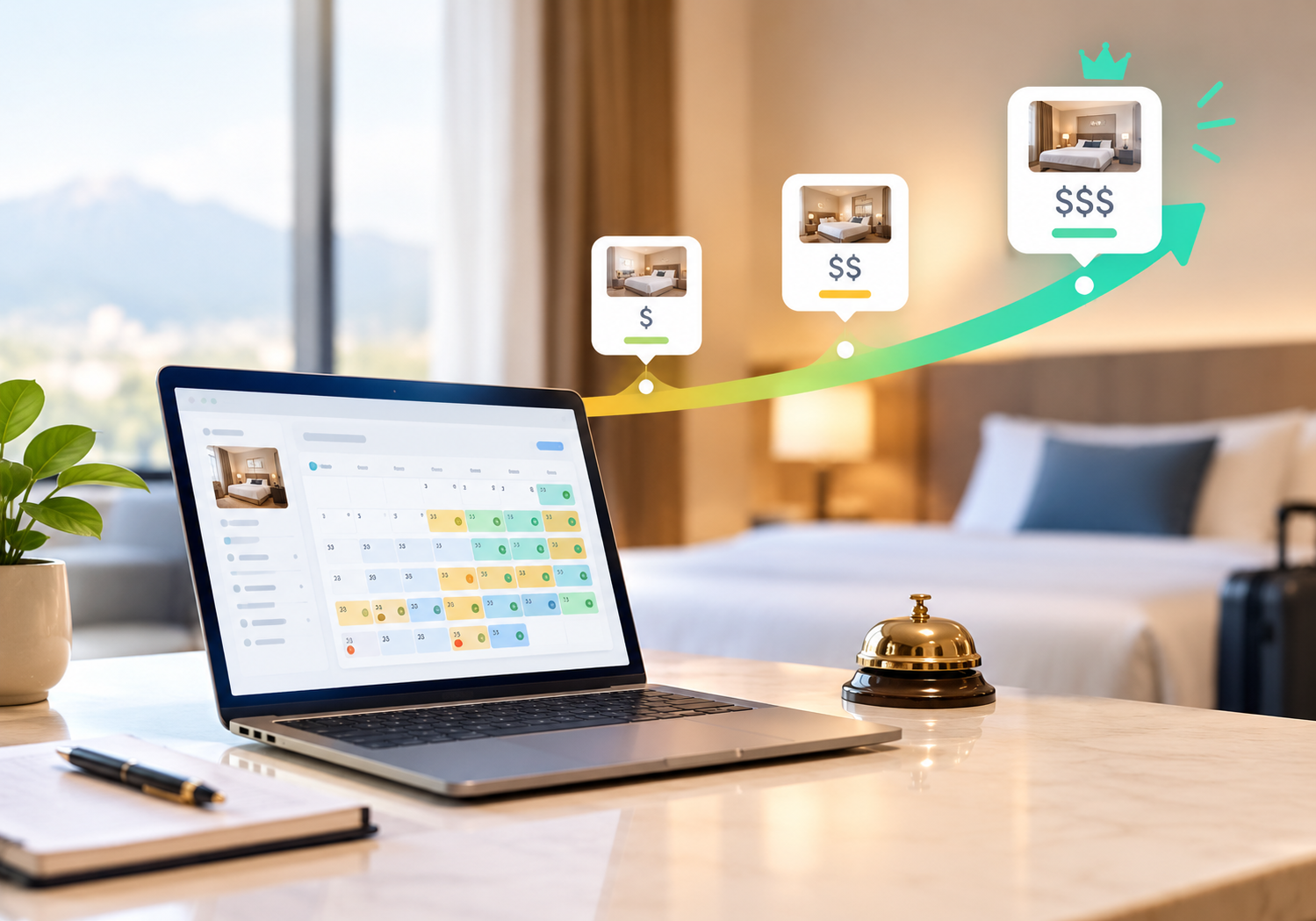
Dynamic pricing means changing your rates based on live market conditions. Demand, competitor rates, seasons, and booking pace all guide the price. The goal is simple. Charge more when demand is high. Charge less when demand is low.
You already see it daily. Airlines adopted this model after US deregulation in 1978. Ride apps raise fares during rush hour. Online stores update prices many times a day.
Hotels are a perfect fit for dynamic pricing. A room is a perishable product. An unsold night cannot be sold tomorrow. So every night is a fresh chance to earn.
Static Pricing vs Dynamic Pricing
- 🧊 Static pricing: One fixed rate for months. Easy to run, but blind to demand.
- ⚡ Flexible rates: Prices shift with demand, events, and competitor moves.
- 📉 Static risk: You undersell peak nights and overprice slow nights.
- 📈 Smart advantage: You capture the highest rate the market will pay.
💡 Why Dynamic Pricing Is Crucial for Your Business
Let us look at the real reasons this approach matters. Each one links directly to your bottom line.
1. Higher Revenue Per Room 💰
Guests pay more when rooms are scarce. Dynamic pricing lets you raise rates at the right moment. Even a small increase adds up over a full year.
2. Better Occupancy on Slow Days 🛏️
Empty rooms hurt more than low rates. A smart discount on a quiet night fills the room. That guest also spends on food, spa, and extras.
3. Faster Reaction to the Market ⏱️
Manual rate changes are slow. A local festival or sudden cricket match can spike demand overnight. Automated rules respond in minutes, not days.
4. Stronger Position Against Competitors 🥊
Your rival drops prices, and you lose bookings without noticing. Live competitor tracking keeps you informed. You can match, hold, or beat their rate with confidence.
5. Decisions Backed by Data 📊
Guesswork fades when numbers guide you. You see which days sell fast and which lag. Every price change becomes a testable decision.
6. Less Dependence on Commission-Heavy OTAs 🌐
Smart rates on your own website can beat OTA prices. Guests then book direct. You keep more margin on every stay.
📊 Key Factors That Drive Dynamic Pricing
Good pricing depends on the right inputs. Here are the main signals hotels should track.
- 📅 Demand and booking pace: Fast bookings signal a chance to raise rates.
- 🏨 Competitor rates: Your price must make sense next to nearby hotels.
- 🎉 Events and holidays: Weddings, concerts, and festivals lift demand sharply.
- 🌦️ Seasonality: Hill stations and beach hotels swing widely across the year.
- ⏳ Lead time: Last-minute guests often pay more than early planners.
- 🛌 Length of stay: Longer stays may deserve a small discount.
- 🔀 Channel mix: Each channel carries a different cost and audience.
🛠️ How Dynamic Pricing Works: Step by Step
You do not need a large team to start. Follow these five steps.
Step 1: Gather your data 📥. Collect two years of booking history if you can. Note peak dates, slow dates, and average daily rate.
Step 2: Set floor and ceiling rates 🚧. Decide the lowest and highest price for each room type. These limits protect your brand.
Step 3: Build simple rules ⚙️. For example, raise rates by 10% when occupancy passes 70%. Lower them when bookings lag.
Step 4: Sync rates everywhere 🔄. A new price must reach every OTA instantly. A reliable channel manager handles this for you. Read our guide on what is a channel manager to learn more.
Step 5: Review and refine 🔍. Check results every week. Keep what works and change what does not.
⏳ Why Timing Matters More Than Ever
Travel behavior has changed. Guests compare five or six booking sites before they pay. Prices are visible everywhere within seconds. A stale rate loses the booking to a sharper competitor.
Indian travel is also more seasonal and event-driven now. Long weekends, weddings, and festivals create sudden demand bursts. Hotels that react early capture the surge. Hotels that react late watch it pass by.
Waiting has a cost. Every unsold night is revenue you cannot recover. That is why modern hoteliers act now rather than later. ⚡
🧭 Popular Dynamic Pricing Strategies
Hotels use several methods. Most successful properties blend two or three of them.
- ⏰ Time-based pricing: Rates change by season, weekday, or hour of booking.
- 📦 Demand-based pricing: Rates rise as rooms sell and fall when bookings slow.
- 🕵️ Competitor-based pricing: Rates follow the moves of your comparison set.
- 🛌 Length-of-stay pricing: Guests booking longer stays earn a friendlier rate.
- 🎁 Segment-based pricing: Business, leisure, and group guests see tailored offers.
No single method fits every property. A city business hotel needs different rules than a beach resort. Test one method, learn from it, and then layer another. This approach keeps your dynamic pricing plan simple and safe.
📏 Metrics That Prove Your Pricing Works
Numbers keep your strategy honest. Track these three every week.
- 🛏️ Occupancy rate: The share of rooms sold on a given night.
- 💵 ADR (Average Daily Rate): The average price paid per occupied room.
- 📈 RevPAR (Revenue Per Available Room): Occupancy multiplied by ADR. It shows the full picture.
High occupancy with a low ADR is a warning sign. It means you sold too cheaply. High ADR with low occupancy means you priced too high. Balanced growth in both is the target. Our Reports module makes this tracking simple.
⚠️ Common Mistakes to Avoid
Even smart hotels slip up. Watch out for these traps.
- 🚫 Changing prices too often: Constant swings confuse guests and staff.
- 🚫 Ignoring brand value: Deep discounts can cheapen your property image.
- 🚫 Copying competitors blindly: Their costs and goals differ from yours.
- 🚫 Forgetting rate parity: Wildly different prices across channels create trust issues.
- 🚫 Skipping reviews: Guest feedback should shape how much you can charge.
Rate mismatches often start with manual updates. Our post on the channel manager for hotels explains how to avoid them.
🏨 A Simple Example From a Boutique Hotel
Here is a hypothetical case to show the idea. A 30-room hotel charges ₹4,000 all year. On a wedding weekend, rooms sell out by Wednesday. The hotel left money on the table.
Now imagine the same hotel uses smart rules. It raises rates as occupancy climbs past 60%. On quiet weekdays, it offers a small early-bird discount. Revenue per room rises, and occupancy stays healthy.
This is an illustration, not a guaranteed result. Your outcome depends on your market, season, and product.
🧩 Real Challenges and How to Solve Them
Every hotel faces hurdles when it starts. Here are the common ones.
Challenge: Fear of losing guests. Many owners worry that higher rates scare buyers. Start with small increases on peak dates only. Watch how bookings respond before going further.
Challenge: Messy data. Old records often hide gaps. Clean your booking history first. Even six months of tidy data helps.
Challenge: Too many channels. Updating ten OTAs by hand invites mistakes. A channel manager removes that burden and keeps rates identical everywhere.
Challenge: Team resistance. Staff may fear change. Share the reasons, show early wins, and train them step by step.
🤖 How SaasAro Makes Dynamic Pricing Easy
At SaasAro, we build tools that hoteliers use every day. Here is how our platform supports smarter rates.
- 📈 Revenue Management System: Suggests and updates prices using demand and booking pace.
- 🔎 Competitor Rate Analyzer: Shows what nearby hotels charge in real time.
- 🔗 Channel Manager: Pushes new rates to 300+ OTAs and channels instantly.
- 🛎️ Web Booking Engine: Turns smart rates into direct bookings on your website.
- 🏢 Property Management System: Keeps rooms, guests, and billing in one place.
- 📑 Reports: Tracks ADR, occupancy, and RevPAR so you can measure progress.
Want channel-specific help? Explore our guides on Booking.com channel manager integration, MakeMyTrip channel manager, and Agoda channel manager integration. Compare options in our best channel manager roundup, or read about a channel manager for OTAs.
🧠 Expert Tips From the SaasAro Team
Our specialists work with hotels of every size across India. These lessons come from that daily experience.
- 💬 Talk to your front desk. They hear what guests say about price.
- 🗓️ Plan for local events months ahead. Set higher floors for those dates.
- 🧾 Keep a record of every rule change. This helps you learn faster.
- 🤝 Pair pricing with great service. Guests forgive a fair premium when the stay delights them.
- 🔐 Choose secure, cloud-based tools. Your rate and guest data deserve strong protection.
✅ Best Practices for Long-Term Success
Follow these habits to make dynamic pricing work for the long term.
- Start small. Test rules on one room type first. 🧪
- Protect your brand. Never drop below your floor rate. 🛡️
- Track the right metrics. Watch ADR, occupancy, and RevPAR together. 📏
- Train your team. Front desk staff should understand why rates change. 👥
- Stay transparent. Show clear inclusions so guests see real value. 🤝
- Review monthly. Markets shift, so your rules should shift too. 🔄
❓ Dynamic Pricing: Questions and Answers
Q1. What is dynamic pricing in simple words?
It means changing your price based on demand and market conditions. You charge more on busy days and less on slow days.
Q2. Is dynamic pricing legal and fair for hotels?
Yes, it is a common and legal practice worldwide. Fairness comes from transparency. Show the full price clearly before the guest pays.
Q3. Will dynamic pricing hurt my guest loyalty?
Not if you use it wisely. Offer loyal guests a member rate on your website. That rewards them and drives direct bookings.
Q4. Can small hotels and homestays use dynamic pricing?
Absolutely. Small properties often gain the most. Even a few smart rules can lift revenue without heavy effort.
Q5. How often should I update my rates?
Review demand daily and adjust when data shows a clear trend. Avoid constant changes without a reason.
Q6. Do I need software to run it?
You can start with a spreadsheet. But manual work gets slow and risky. Software automates updates and prevents errors across OTAs.
🎯 Final Thoughts
Fixed prices belong to a slower era. Today, demand shifts by the hour. Hotels that embrace dynamic pricing win more bookings and earn more per room.
Dynamic pricing is not about charging guests more. It is about charging the right price at the right time. Start small, measure results, and improve steadily. 📈
Ready to see it in action? Our team is here to help. 🙌
📞 Book Your Free Demo Today!
Stop guessing your rates. Let SaasAro help you price smarter and sell more. 🚀
📱 Call us: +91 75000 87037