
What is a channel manager, and why does it matter for your hotel? A channel manager is software that syncs your room rates and availability across every OTA in real time. Without one, hoteliers update Booking.com, Expedia, MakeMyTrip, and Agoda by hand, one login at a time. That manual process wastes hours every single day. It also invites double bookings, angry guests, and lost revenue. This guide breaks down exactly what a channel manager does. You will learn how it works, why it matters, and how to pick the right one. We also cover common mistakes hoteliers make when choosing one. By the end, you will know exactly what to look for before you buy.
👉 Ready to stop juggling five OTA extranets every morning? Explore SaasAro’s Channel Manager and sync every channel in seconds.
What is a Channel Manager? Understanding the Basics 📖
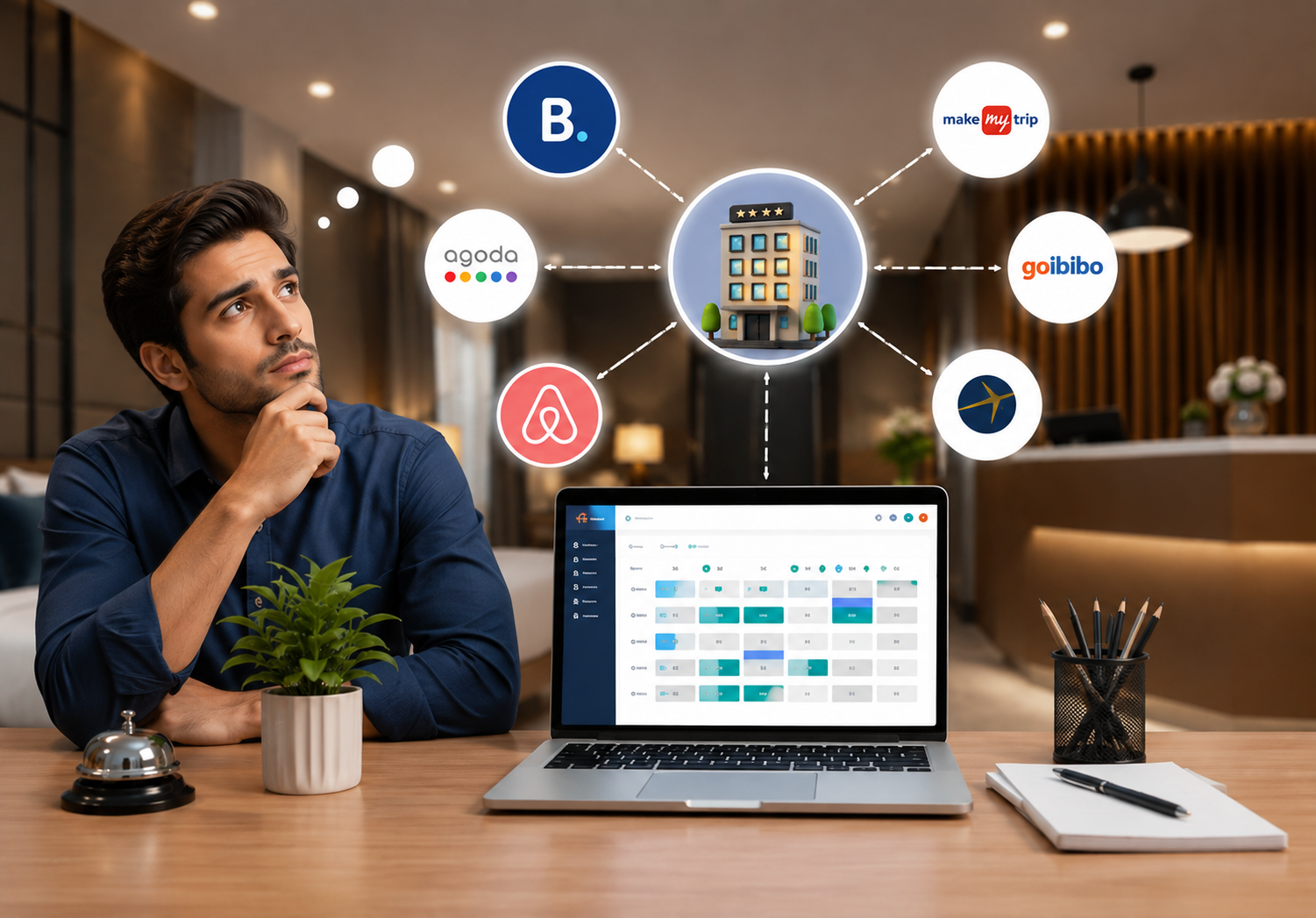
In simple terms, a channel manager is a centralized dashboard for hotel distribution. It connects your property to OTAs, GDS networks, and your own website. Every time a room sells on one channel, the system updates all others instantly. This prevents overbooking and keeps your rates consistent everywhere. Hoteliers no longer log into separate extranets for each platform. One dashboard controls inventory, pricing, and restrictions across the board. Think of it as mission control for your entire online presence. Instead of five browser tabs, you get one clear screen. That single view saves time and removes guesswork from daily operations.
How Does a Channel Manager Actually Work? ⚙️
A channel manager connects to OTAs through direct APIs or a central reservation system. When a guest books on Airbnb, the manager receives that data instantly. It then pushes an availability update to Booking.com, Expedia, and every other connected channel. This two-way sync typically completes in under two seconds. Rates, restrictions, and stop-sells travel the same path. The result is one source of truth for your entire distribution strategy. It also connects to your booking engine, so direct bookings stay in sync too. Behind the scenes, the software constantly checks every connected platform for changes. This constant monitoring is what makes real-time inventory control possible.
Why Every Hotel Needs a Channel Manager 📈
Modern travelers compare multiple platforms before booking a room. Studies show guests check seven to eight sites before confirming a reservation. That means your property needs visibility everywhere guests are searching. Manual updates cannot keep pace with dozens of active channels. A single missed update can cause a double booking and an angry guest. Hotels using a channel manager report fewer overbookings and stronger occupancy. The tool has moved from a nice-to-have to an operational necessity. Even small guesthouses now list on five or more OTAs at once. Without automation, that workload quickly becomes impossible to manage accurately. A channel manager turns that complexity into a simple, reliable process. It also gives owners more time to focus on guest experience. Peak seasons like Diwali or Christmas make this reliability even more valuable.
Key Features to Look for in a Channel Manager ✅
Not every channel manager offers the same depth of functionality. Before signing a contract, compare these core capabilities closely.
- ⚡ Real-time two-way sync across all connected OTAs, so inventory never drifts out of date
- 💰 Rate parity tools that flag pricing mismatches before they trigger OTA penalties
- 🏢 Bulk rate and inventory updates across multiple properties from a single screen
- 🛑 Stop-sell and restriction controls for handling last-minute changes or maintenance closures
- 📊 Detailed channel performance reports that show which platforms actually drive bookings
- 🔗 PMS and booking engine integration, so every system shares the same live data
- 📱 Mobile access, so managers can adjust rates and availability from anywhere
Channel Manager vs PMS vs Booking Engine 🔍
These three tools often get confused, but each plays a distinct role. A property management system runs daily hotel operations, from check-in to housekeeping. A channel manager distributes your inventory across every connected OTA. A booking engine captures direct reservations from your own hotel website. Together, they form a complete hotel commerce stack. SaasAro combines all three, plus revenue management, in one unified platform. Understanding this difference helps you avoid buying overlapping or incompatible tools.
| Tool | Main Job |
|---|---|
| 🔄 Channel Manager | Syncs rates and availability across every connected OTA |
| 🏨 PMS | Manages reservations, housekeeping, guest profiles, and billing |
| 💻 Booking Engine | Captures commission-free direct bookings from your own website |
Benefits of Using a Channel Manager 🎯
- ✅ Eliminates double bookings across every connected platform automatically
- ⏱️ Saves hours of manual extranet work for your front desk team every week
- 🤝 Improves rate parity, which protects your standing with major OTAs
- 🌍 Increases visibility by making it easy to list on more booking channels
- 😊 Frees staff to focus on guest experience instead of repetitive data entry
- 📈 Provides real-time performance data, so you know which channels actually convert
- 🎉 Reduces human error during high-demand periods and festival season rushes
Common Mistakes Hotels Make⚠️
Many hoteliers connect every available OTA without checking guest fit first. This scatters listings across platforms that rarely match their target traveler. Others skip rate parity checks and get flagged by major OTAs. Some properties choose the cheapest tool without confirming true sync speed. A slow sync of even a few minutes can still cause overbooking. Skipping proper staff training is another common and costly mistake. Even the best channel manager fails if front desk teams misuse it. Reviewing performance reports monthly helps hotels catch these issues early. Regular staff refreshers also keep everyone confident using the dashboard correctly.
Channel Manager and OTA Commission: What to Expect 💳
A channel manager does not remove OTA commission fees directly. Those fees are set by each individual platform, not the software. What it does is help you balance OTA bookings with direct ones. By connecting a booking engine, more guests can book straight from your website. Over time, this shifts revenue mix toward lower-commission direct bookings. Many hotels track this ratio monthly to measure real distribution savings. A healthy direct booking share also gives hotels more control over guest relationships.
What to Expect During Channel Manager Setup 🛠️
Setup usually starts with connecting your existing OTA accounts one by one. Most providers assign a dedicated specialist to guide this first step. Room types and rate plans get mapped between your PMS and each OTA. This mapping stage is critical, since errors here cause pricing mismatches later. A test booking on each channel confirms the sync is working correctly. Most hotels complete full setup within a few business days, not weeks. After launch, ongoing support helps handle new channel connections as you grow.
How to Choose the Right Channel Manager for Your Hotel 🧭
So, what is a channel manager worth to your property if you pick the wrong one? A poor fit creates more work, not less. Start by checking how many OTAs and GDS networks the system actually supports. Confirm the sync speed, since delays of even a few minutes cause overbookings. Look for transparent, per-room pricing without hidden setup or cancellation fees. Check whether it integrates cleanly with your existing PMS and booking engine. Ask about onboarding time, since some systems take weeks to configure properly. Finally, read reviews from hotels of a similar size and market. A demo call is also worth the time before you commit.
Why Hotels Choose SaasAro’s Channel Manager 💡
SaasAro connects hotels to over 200 OTAs, GDS networks, and metasearch platforms. Rate and inventory updates sync in under two seconds across every channel. The platform integrates natively with SaasAro’s PMS, booking engine, and revenue management tools. Pricing is transparent and starts at budget-friendly monthly plans for small properties. Thousands of properties across India already rely on SaasAro for daily operations. Our support team helps new hotels get fully onboarded within a single day. Every update, from a new rate plan to a stop-sell, reflects instantly everywhere. That reliability is why independent hotels and larger chains both choose SaasAro. Dedicated account managers also help properties fine-tune their channel mix over time. This ongoing support is a key reason retention stays consistently high.
👉 See real-time OTA sync in action for yourself. Start your free SaasAro trial today.
Quick Recap: Channel Manager Essentials 📌
- A channel manager syncs rates and availability across every connected OTA
- It prevents double bookings through real-time, two-way data updates
- It works alongside your PMS, booking engine, and revenue management tools
- The right choice depends on OTA coverage, sync speed, and transparent pricing
- SaasAro connects to over 200 OTAs with sync times under two seconds
Frequently Asked Questions ❓
Q1. What is a channel manager, and how does it help hotels?
A channel manager is software that syncs room rates and availability across every OTA automatically. It stops double bookings, protects rate parity, and saves hours of manual work every week.
Q2. Is a channel manager the same as a PMS?
No, A PMS manages daily hotel operations, while a channel manager handles OTA distribution. Learn more in our detailed guide on channel manager APIs.
Q3. How much does a channel manager cost?
Pricing varies by property size, room count, and the number of OTAs connected. Most solutions charge a transparent monthly fee. Check current plans on our pricing page.
Q4. Can a channel manager prevent overbooking?
Yes, Real-time two-way sync updates every connected channel the instant a room sells. This nearly eliminates the risk of accidental double bookings.
Q5. Does a channel manager support revenue management?
Many modern channel managers integrate directly with revenue management tools. This combination allows dynamic pricing to update automatically across every connected OTA.
Q6. Is a channel manager worth it for a small hotel?
Yes, Even small properties list on multiple OTAs today. A channel manager saves time and prevents costly booking errors regardless of property size. Many affordable plans are built specifically for guesthouses and boutique stays.
Final Thoughts 🏁
Understanding what is a channel manager is the first step toward smarter distribution. The right system saves time, prevents errors, and steadily grows revenue. As OTA competition grows through 2026, manual updates simply cannot keep up anymore. A reliable channel manager keeps your property visible, accurate, and consistently profitable.
👉 Ready to simplify your hotel’s distribution this year? Talk to SaasAro today and see the difference real-time sync makes.