
Maximize Revenue Using Dynamic Pricing is the smartest move a modern hotelier can make today. 💡 Guest demand shifts every hour. Your room rates should shift with it. Fixed price lists leave money on the table every single week. In this guide, you will learn how to maximize revenue using dynamic pricing step by step. ✅ Our team works with hotels across India, so every tip here is practical. By the end, you will know exactly where to start.
🏨 What Is Dynamic Pricing in Hotels?
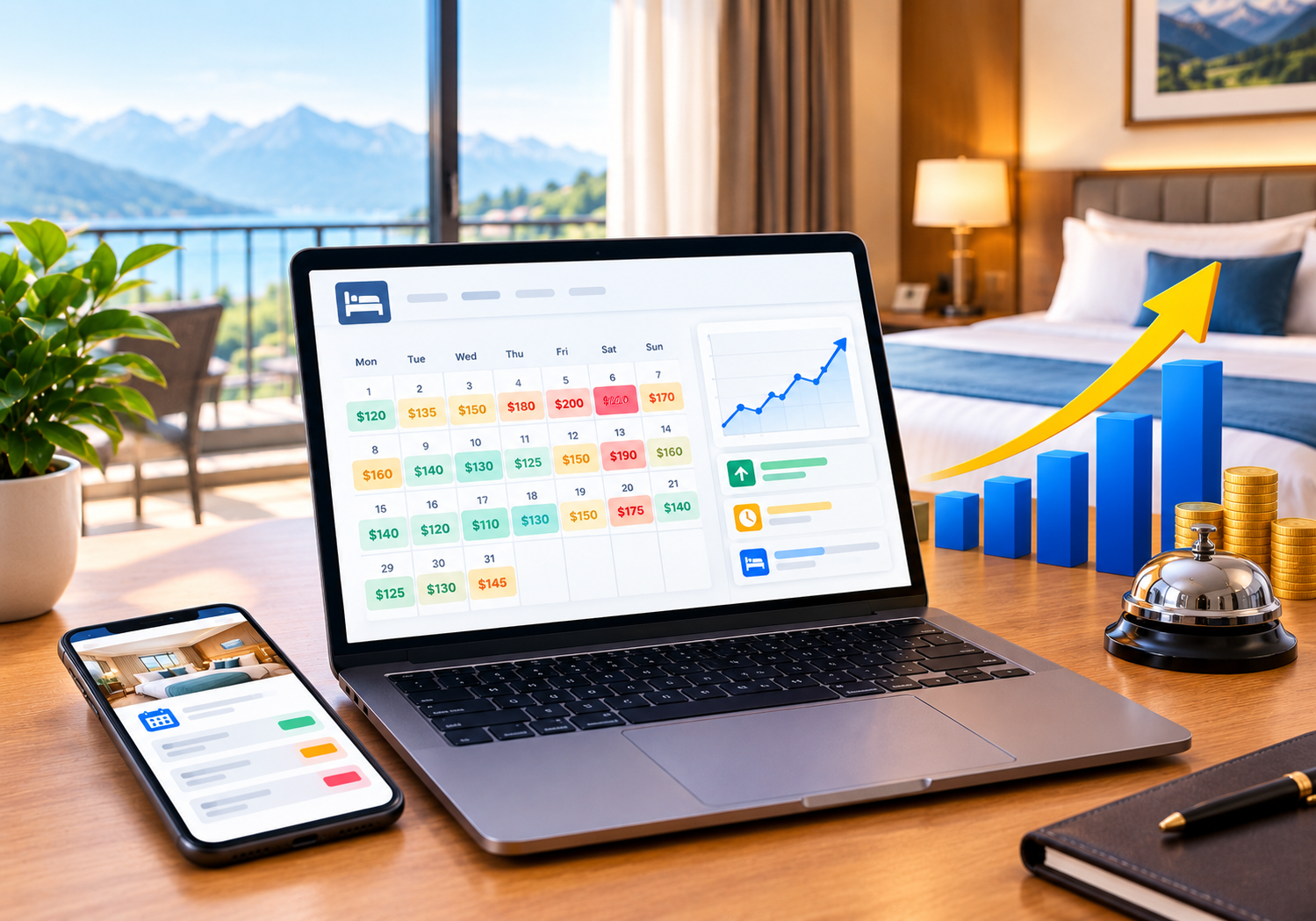
Dynamic pricing means changing room rates based on live market signals. Instead of one fixed rate, you sell each room at its best price. Airlines have used this model for decades. Hotels now use it too.
Common signals include demand, seasonality, local events, competitor rates, lead time, and occupancy. A smart system reads these signals and updates prices automatically.
Picture a boutique hotel in Jaipur during a wedding weekend. A fixed rate undersells the room. A dynamic rate captures its true value. That is how you maximize revenue using dynamic pricing in real life.
📈 Why You Should Maximize Revenue Using Dynamic Pricing
Here are the biggest benefits hoteliers see:
- 💰 Higher RevPAR: Better peak pricing lifts revenue per available room.
- 🛏️ Fewer empty rooms: Smart discounts fill gaps without hurting your brand.
- 🏆 Competitive edge: You react to market moves before rivals do.
- ⏱️ Less manual work: Automation frees your team for guest service.
- 📊 Better forecasts: Data reveals demand patterns months ahead.
Many owners ask if dynamic pricing hurts guest loyalty. In our experience, it does not. Guests value fair rates tied to clear demand. When you maximize revenue using dynamic pricing with transparent rules, trust grows.
🧩 Popular Dynamic Pricing Strategies
Different hotels need different approaches. Choose the model that fits your property:
- ⏰ Time-based pricing: Raise or lower rates as the check-in date approaches.
- 📅 Seasonal pricing: Set higher bases for festivals, holidays, and wedding seasons.
- 👥 Demand-based pricing: Rates rise automatically as occupancy climbs.
- 🏨 Competitor-based pricing: Match or beat nearby hotels when it makes sense.
- 🌙 Length-of-stay pricing: Reward longer stays with better nightly rates.
- 🎉 Event-based pricing: Adjust rates around concerts, sports, and local fairs.
Most successful hotels blend two or three models. For example, combine seasonal bases with demand triggers. This layered approach keeps your pricing flexible yet controlled. Start with one model and add more as you gain confidence.
🌍 Factors That Influence Your Room Rates
Rates never move in isolation. Several factors shape what guests will pay:
- Demand and occupancy: Fewer available rooms usually justify higher prices.
- Seasonality: Tourist peaks and off-seasons shift willingness to pay.
- Lead time: Last-minute guests often accept higher rates.
- Competitor pricing: Guests compare options within seconds online.
- Reviews and reputation: Strong ratings support premium pricing.
- Local events: Festivals and conferences spike demand overnight.
Reputation matters more than many owners realize. Guests pay more for hotels they trust. Our Reputation Management tools help you collect and showcase positive reviews. ⭐
🔑 Key Metrics to Track Before You Start
Good pricing starts with good data. Track these numbers every week:
- ADR (Average Daily Rate): The average price paid per occupied room.
- Occupancy rate: The share of rooms sold on a given night.
- RevPAR: Revenue per available room, your best health indicator.
- Booking pace: How fast reservations arrive for future dates.
- Channel mix: Which platforms deliver your highest-value guests.
- Cancellation rate: A sign of price or policy friction.
Our Reports and analytics module makes these numbers easy to read. You can spot trends in minutes, not days. 📉
🛠️ 7 Steps to Maximize Revenue Using Dynamic Pricing
Step 1: Audit Your Historical Data 🔍
Review at least twelve months of bookings. Note peak days, slow days, and seasonal swings. This history becomes your pricing baseline.
Step 2: Segment Your Demand 🎯
Group guests by type, such as business, leisure, and groups. Each segment reacts to price differently. Treat them separately.
Step 3: Set Floor and Ceiling Rates 🧱
Decide the lowest and highest price for each room type. These limits protect your brand from extreme swings.
Step 4: Monitor Competitor Rates 👀
Know what nearby hotels charge each day. Our Competitor Rate Analyzer shows market gaps clearly. Adjust prices when rivals sell out or discount.
Step 5: Automate With a Revenue Management System 🤖
Manual updates cannot keep pace with live demand. A Revenue Management System is the engine that helps you maximize revenue using dynamic pricing at scale.
Step 6: Sync Rates Across Every Channel 🔄
Rate mismatches confuse guests and hurt trust. A Channel Manager pushes your new prices to every OTA instantly. It also prevents double bookings.
Step 7: Review and Refine Weekly 🔁
Compare forecast versus actual results every week. Tweak your rules based on what works. Patience and discipline help you maximize revenue using dynamic pricing over the long term.
✅ Quick Pricing Checklist
Before you go live, tick off this list:
- ☑️ Twelve months of booking data reviewed
- ☑️ Floor and ceiling rates set for each room type
- ☑️ Competitor set defined and tracked daily
- ☑️ Channel manager connected for instant sync
- ☑️ Weekly review meeting scheduled
- ☑️ Direct booking offers published on your website
Print this list and share it with your front office and sales teams. A shared checklist keeps everyone aligned. 📝
🏨 How SaasAro Helps You Price Smarter
SaasAro is a cloud-based hotel commerce platform trusted by 10,000+ properties. SaasAro helps you maximize revenue using dynamic pricing from a single dashboard.
- ✅ Revenue Management System: Optimize pricing strategies with data-led insights.
- ✅ Channel Manager: Sync rates and inventory across 300+ OTAs.
- ✅ Web Booking Engine: Drive direct bookings and cut commission costs.
- ✅ Property Management System: Manage front desk, housekeeping, and guest data together.
- ✅ Multi-Property Management: Control rates for many hotels from one place.
Hotels that want to maximize revenue using dynamic pricing need connected tools. Disconnected software creates errors and delays. SaasAro removes that friction. You can read more strategies on the SaasAro blog. 📚
🏆 Why Direct Bookings Matter for Pricing
OTAs bring reach, but they also charge commission. Direct bookings keep more profit in your pocket. A fast booking engine on your own website lets you offer exclusive rates. Guests who book direct often return again. Combine this with a website builder for a smooth, mobile-friendly journey. 📱
💡 Tip: Show a best-rate guarantee on your site. It builds confidence and nudges guests away from OTAs.
⚠️ Common Mistakes to Avoid
Even smart hoteliers slip up. Avoid these traps:
- ❌ Ignoring local events like festivals, concerts, and conferences.
- ❌ Setting no minimum or maximum limits on rates.
- ❌ Updating prices manually and falling behind demand.
- ❌ Forgetting rate parity across OTAs and your website.
- ❌ Discounting too early and losing high-paying guests.
Remember, the goal to maximize revenue using dynamic pricing is profit, not just full rooms. A full hotel at low rates can earn less than a half-full hotel at strong rates.
📊 A Simple Illustrative Example
Let us use simple, illustrative numbers. Imagine a 40-room hotel with a fixed rate of ₹3,000. On a high-demand weekend, the market supports ₹4,500. Selling 30 rooms at ₹4,500 earns ₹1,35,000. The fixed rate earns only ₹90,000. That is a ₹45,000 gain from one weekend. 🎉
Actual results vary by market and property. Now repeat that logic across a full year. This is why hotels maximize revenue using dynamic pricing as a core strategy.
🧠 Expert Tips from Our Revenue Team
We have seen what works across independent hotels, resorts, and homestays. Use these tips to maximize revenue using dynamic pricing:
- Start small. Test your first dynamic pricing rules on one room type.
- Use longer minimum stays during peak demand dates.
- Bundle breakfast or spa offers instead of cutting your rate.
- Promote your direct website with member-only perks.
- Train staff to explain pricing clearly and politely.
The best way to maximize revenue using dynamic pricing is to combine data with human judgment. Software gives you speed. Your team gives you local insight. Together, they win. 🤝
🔮 The Future of Hotel Pricing
Pricing technology keeps evolving fast. Artificial intelligence now spots demand patterns humans often miss. Forecasts get sharper every year. Hotels that adopt these tools early gain a lasting advantage. Guests will expect personalised, fair, and transparent prices. Prepare your property today to meet that expectation. 🚀
👨💼 Why Trust This Guide?
This guide reflects hands-on experience from the SaasAro team. SaasAro is trusted by 10,000+ properties for PMS, channel, and revenue tools. Our advice follows hospitality best practices and real hotelier feedback. We update this article regularly to keep it accurate. Have a pricing question? Our support team is happy to help.
❓ Frequently Asked Questions
Q1. What does it mean to maximize revenue using dynamic pricing?
It means adjusting room rates using real-time demand, competitor prices, and booking trends. The aim is to sell every room at its best possible price.
Q2. Is dynamic pricing suitable for small hotels and homestays?
Yes. Small properties often benefit most because every room matters. Even simple rules can lift income noticeably.
Q3. How often should I update room rates?
Review rates daily during peak periods. In slow periods, weekly reviews work well. An automated system updates prices continuously.
Q4. Can software help me maximize revenue using dynamic pricing?
Yes. A revenue management system analyzes data faster than any team. SaasAro’s tools help you maximize revenue using dynamic pricing without daily manual work.
Q5. Will dynamic pricing upset my loyal guests?
Not when done fairly. Offer loyal guests direct-booking perks and best-rate guarantees. Transparent policies protect trust.
Q6. What is the best way to maximize revenue using dynamic pricing in India?
Combine local demand knowledge with automation. Track festivals, wedding seasons, and school holidays. Then sync rates through a channel manager.
🏁 Final Thoughts
Hotels that maximize revenue using dynamic pricing stay ahead of the market. They earn more on busy nights and fill rooms on quiet ones. Start with clean data, clear limits, and the right technology. Review results weekly and keep improving. Your next booking could be priced better than your last. 🌟
Now is the best time to maximize revenue using dynamic pricing at your property.
🚀 Ready to Grow Your Hotel Revenue?
Book your free demo with SaasAro today. See pricing automation, channel sync, and reporting in action.
📞 Call us: +91 75000 87037