
Introduction
The hotel industry is evolving faster than ever, and modern technology now plays a major role in boosting bookings, improving guest experience, and streamlining operations. Whether you run a boutique hotel, resort, BnB, or homestay, using the right digital tools is no longer optional—it’s essential for staying competitive.
Thanks for reading this blog!, Looking for professional help with your hotel listings?
👉 Sign up with SaasAro or call 75000-87037 today!
If you’d prefer to handle the listing yourself, keep reading and enjoy the complete blog below.
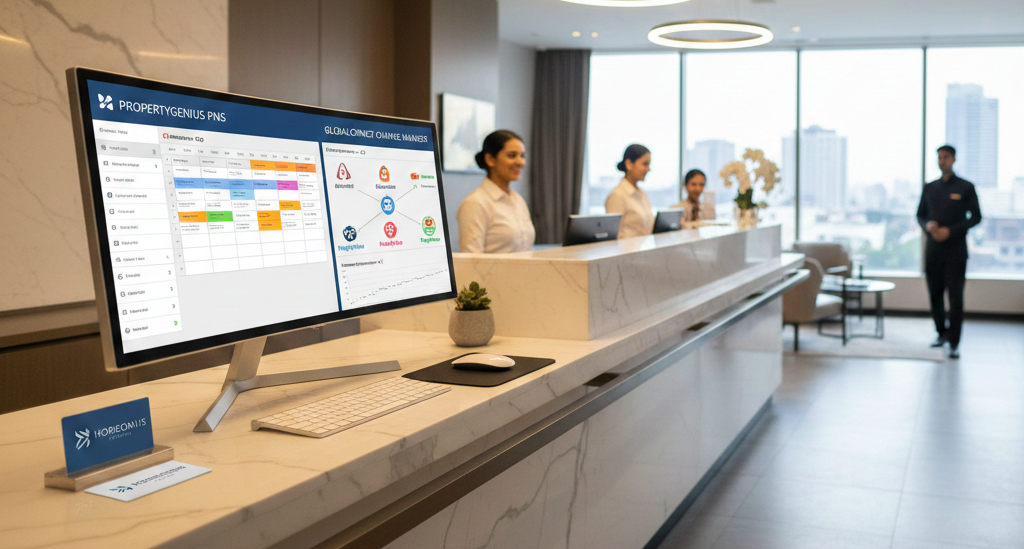
Today’s travelers expect instant confirmations, real-time availability, smooth check-ins, and consistent service across every online platform. To meet these expectations, hotels are turning to advanced technology solutions that automate routine tasks and improve revenue performance. Tools like PMS (Property Management System) and Channel Manager make it easier for hoteliers to manage operations, synchronize rates, prevent overbookings, and increase visibility across OTAs.
Simply put—modern hotel tech reduces manual work, increases efficiency, and helps properties grow faster while serving guests better.
What Is a Property Management System (PMS)?
A Property Management System (PMS) is a hotel’s central operating software that helps manage daily tasks such as bookings, check-ins, housekeeping, billing, and reporting. It replaces manual work with smart automation, allowing hotels to run smoothly and deliver a better guest experience. Whether you manage a small homestay or a large hotel, a PMS acts as the control center for your entire property.
Definition and Purpose
A PMS is designed to streamline all internal hotel operations. Its main purpose is to:
-
Simplify front-desk activities
-
Centralize reservation data
-
Track room status and housekeeping
-
Manage guest profiles and stays
-
Process payments and invoices
-
Provide real-time insights and reports
In short, a PMS helps hotels save time, reduce errors, and operate more efficiently.
Core Features of a PMS
A modern PMS comes with powerful features that automate the majority of hotel tasks.
Front Desk Operations
Your front desk staff can handle everything from one dashboard:
-
Room allocation
-
Guest check-in and check-out
-
Updating room availability
-
Managing special requests
-
Tracking guest history
It makes daily operations faster and more organized.
Reservations Management
A PMS centralizes all bookings—whether they come from your website, OTAs, walk-ins, or phone calls. Key capabilities include:
-
Real-time availability updates
-
Automatic booking confirmations
-
Preventing double bookings
-
Unified reservation calendar
-
Guest profile and booking history storage
This ensures accuracy and better control over every reservation.
Housekeeping & Task Automation
A good PMS helps hotels stay organized behind the scenes:
-
Real-time room status updates (clean, dirty, in-progress)
-
Automatic task assignments to housekeeping staff
-
Notifications for room readiness
-
Maintenance request tracking
This boosts staff coordination and speeds up room turnover.
Guest Check-In/Out Workflows
A PMS simplifies guest movement throughout their stay:
-
Quick digital check-in and check-out
-
ID capture and verification
-
Early check-in / late check-out management
-
Seamless communication between front desk and housekeeping
This results in a smooth and professional guest experience.
Payment & Billing
Billing becomes easy and error-free with PMS automation:
-
Auto-generated invoices
-
Digital receipts
-
Multiple payment modes (UPI, cards, cash, online gateways)
-
Posting charges (restaurant, minibar, activities)
-
Secure payment tracking
It ensures complete transparency for both the hotel and guests.
How PMS Improves Operational Efficiency
A PMS saves time, reduces manual mistakes, and gives hotel staff the tools they need to work smarter. It helps you:
-
Automate repetitive tasks
-
Manage everything from a single dashboard
-
Improve staff productivity
-
Keep all departments in sync
-
Provide faster service to guests
-
Reduce operational costs
With a strong PMS, hotels can run more efficiently, improve guest satisfaction, and scale their business with confidence.
What Is a Channel Manager?
A Channel Manager is a hotel software tool that helps you manage your property’s availability, rates, and bookings across multiple online travel agencies (OTAs) from one dashboard. Instead of updating rooms manually on each platform, a channel manager synchronizes everything automatically—saving time and increasing your online visibility.
Definition and Importance for Online Distribution
A channel manager is essential for any hotel that wants to grow online. It connects your property to OTAs like Booking.com, MakeMyTrip, Airbnb, Agoda, Expedia, and more. Its main purpose is to:
-
Keep room availability updated everywhere
-
Maintain consistent pricing across platforms
-
Distribute rooms to multiple online channels at once
-
Prevent overbookings and manual errors
With accurate real-time updates, hotels can reach more guests, attract more bookings, and stay competitive in the online marketplace.
How a Channel Manager Works with OTAs
A channel manager acts as a bridge between your PMS and all connected OTAs. Here’s how it works:
-
You update your rates and availability once in the channel manager.
-
It automatically syncs this information across every OTA within seconds.
-
When a new booking comes from any OTA, it instantly updates availability everywhere else.
This two-way connectivity ensures that your property always shows correct information across all channels.
Key Features of a Modern Channel Manager
A good channel manager includes powerful tools that improve online distribution and revenue performance.
Real-Time Inventory Sync
Your room availability updates instantly across all OTAs.
This eliminates manual updates, reduces staff workload, and ensures you never show incorrect availability.
Rate Parity Management
A channel manager helps maintain consistent pricing across all platforms.
With rate parity, you:
-
Avoid pricing conflicts
-
Gain better ranking on OTAs
-
Ensure guest trust with stable pricing
Some channel managers also support dynamic pricing based on demand and seasonality.
Avoiding Overbooking
One of the biggest benefits is preventing overbookings.
The channel manager blocks a room on all OTAs the moment it gets booked anywhere, ensuring:
-
No double-bookings
-
No last-minute cancellations
-
Better guest experience
Multi-OTA Connectivity
You can connect your property to dozens of OTAs, including:
Booking.com
MakeMyTrip
Goibibo
Airbnb
Agoda
Expedia
Cleartrip
Trip.com
More visibility = more bookings = more revenue.
How Channel Managers Increase Bookings
Using a channel manager directly boosts your hotel’s revenue and occupancy by:
-
Expanding your presence on multiple OTAs
-
Improving ranking with consistent rates and availability
-
Reducing manual errors that cause missed reservations
-
Allowing dynamic pricing to maximize revenue
-
Keeping your listings always up to date
Hotels using a strong channel manager often see a 25–40% increase in online bookings simply because their property becomes easier to find and book.
PMS vs Channel Manager: Key Differences
While both PMS and Channel Manager are essential hotel technology tools, they serve very different purposes. A PMS focuses on internal hotel operations, while a Channel Manager handles external online distribution and bookings. Understanding the difference helps you choose the right combination for smooth operations and higher revenue.
Core Functionalities Comparison
-
PMS manages internal workflows like reservations, check-in/out, billing, housekeeping, and reporting.
-
Channel Manager manages online inventory, rates, and connections with OTAs to boost bookings.
In simple terms:
PMS = Internal hotel management
Channel Manager = External booking distribution
| Category | PMS (Property Management System) | Channel Manager |
|---|---|---|
| Primary Role | Manages internal hotel operations | Manages external OTA connections & online distribution |
| Main Purpose | Streamline front desk, housekeeping, billing, and guest management | Update inventory and rates across all OTAs in real-time |
| Key Functions | Check-in/out, room status, payments, reports, staff coordination | OTA connectivity, real-time sync, rate parity, booking updates |
| Helps With | Daily operations, guest service, staff productivity | Increasing bookings, preventing overbookings, expanding visibility |
| Data Handling | Stores guest profiles, reservations, invoices | Manages availability, pricing, channel performance |
| Where It Works | Inside the property (front desk + backend) | Across external platforms (OTAs, booking engines) |
| Direct Impact | Better operational efficiency | Higher occupancy and revenue |
| Common Users | Front desk staff, housekeeping, management | Revenue managers, marketing team, distribution managers |
| Benefits | Faster operations, fewer manual tasks, improved guest experience | More bookings, fewer errors, consistent rates, larger online presence |
How Both Systems Work Together
A PMS and Channel Manager are powerful on their own—but when they work together, they create a fully connected hotel ecosystem. This integration helps hotels automate operations, increase bookings, and deliver a smooth guest experience from start to finish.
Integration Importance
Connecting your PMS with a Channel Manager allows data to move seamlessly between internal operations and external OTA platforms. This integration ensures:
-
Real-time updates
-
Zero manual errors
-
Accurate information across all systems
-
Faster response to booking changes
For modern hotels, PMS + Channel Manager integration is essential for running an efficient and profitable business.
Unified Operations
When both systems are connected, your entire hotel workflow becomes unified. For example:
-
A reservation made on an OTA flows directly into the PMS
-
The PMS updates room status and guest details instantly
-
Any changes you make in the PMS (rates, availability) sync automatically to the Channel Manager
This eliminates repetitive work and keeps all departments aligned.
Consistent Rate and Availability Updates
With both systems working together, you only update your rates and availability once. The Channel Manager sends this data to all OTAs, while the PMS updates your internal reservation calendar.
Benefits include:
-
No rate mismatches
-
No double bookings
-
Correct availability shown across all platforms
-
Better OTA ranking due to accurate data
Consistency directly boosts trust and conversions.
Impact on Guest Experience & Revenue
A smooth backend system results in a smoother guest journey. Integrated PMS + Channel Manager helps improve:
Guest Experience
-
Faster check-in and check-out
-
Accurate room allocation
-
Instant booking confirmations
-
Fewer errors or miscommunications
Revenue Growth
-
More OTA visibility
-
Better rate management
-
Higher occupancy
-
Fewer cancellations due to overbooking
When systems communicate properly, your hotel performs better overall.
How PMS + Channel Manager Improves Efficiency
Together, these tools create a highly efficient hotel operation by:
-
Automating manual tasks
-
Saving hours of staff time
-
Reducing dependency on spreadsheets
-
Improving internal and external data accuracy
-
Providing clear insights for decision-making
-
Enabling dynamic pricing and inventory control
This combined setup allows hotels to scale confidently while focusing on guest satisfaction instead of routine admin work.
Why Choosing the Right Tools Matters for Growth
In today’s competitive hospitality industry, choosing the right hotel technology isn’t just helpful—it’s essential for long-term growth. Modern tools like PMS and Channel Manager reduce manual effort, improve accuracy, and help hotels deliver a better experience to every guest. When your operations run smoothly, your revenue grows faster and more consistently.
Reduced Manual Work
Managing bookings, updating availability, assigning rooms, coordinating housekeeping, and preparing invoices can take hours every day. With the right system:
-
Most routine tasks are automated
-
Staff spend less time on paperwork
-
Teams can focus more on guest service
-
Workloads become more manageable
This boosts productivity and reduces stress for your entire team.
Fewer Errors and Overbookings
Manual updates often lead to mistakes—double bookings, wrong room assignments, or mismatched rates. The right tools help prevent:
-
Overbooking issues
-
Rate mismatches across OTAs
-
Missed reservations
-
Incorrect availability displays
Accurate data builds trust with guests and improves your OTA rankings.
Higher Occupancy Rates
When your property is present on multiple OTAs, updated in real time, and priced correctly, your occupancy naturally increases. The right technology helps you:
-
Reach more guests
-
Maximize room sales
-
Maintain rate parity
-
Capture last-minute bookings
Better visibility = more bookings = higher occupancy.
Better Guest Satisfaction
Modern guests expect smooth communication, fast service, and error-free stays. Tech-enabled operations ensure:
-
Quick check-in and check-out
-
Real-time updates on room status
-
Accurate billing
-
Faster issue resolution
-
Personalized service using guest data
Happy guests leave better reviews—and better reviews lead to more bookings.
Faster Revenue Growth With Automation
Automation directly impacts your revenue by:
-
Eliminating manual pricing updates
-
Allowing dynamic rate adjustments
-
Ensuring 24/7 availability on every OTA
-
Reducing revenue leaks from errors
-
Improving staff efficiency and service quality
With the right tools, your hotel grows faster with less effort.
PMS or Channel Manager — Which One Should You Choose?
While both PMS and Channel Manager play a crucial role in hotel success, the right choice depends on your property’s size, goals, and current challenges. Some hotels need a PMS first; others need a channel manager to boost online bookings. But in most cases, using both together delivers the best results.
Who Should Prioritize a PMS
You should choose a Property Management System (PMS) if your main focus is improving internal hotel operations. Prioritize a PMS when:
-
Your front desk processes take too long
-
You manage bookings manually on Excel or registers
-
Housekeeping coordination is slow or confusing
-
Guests experience delays during check-in or check-out
-
Billing mistakes or manual errors happen often
-
You need better reporting and staff productivity
A PMS is essential for hotels that want to streamline daily operations, improve guest service, and eliminate manual work.
Who Should Invest in a Channel Manager
A Channel Manager is the right choice if your primary goal is getting more online bookings. Choose a channel manager when:
-
You list your property on OTAs like Booking.com, MMT, Airbnb, etc.
-
You struggle with rate updates across platforms
-
You face overbookings or mismatched availability
-
You want to increase visibility across more OTA channels
-
Your occupancy rate is low
-
You want to apply dynamic pricing more efficiently
A channel manager helps you grow your online presence, boost occupancy, and maximize revenue from every room.
Why Most Hotels Need Both
For modern properties, using both PMS + Channel Manager together offers the strongest benefits. When integrated, they help you:
-
Automate all operations from bookings to billing
-
Sync availability and rates across all OTAs
-
Avoid double bookings and pricing errors
-
Offer faster guest service
-
Increase occupancy and revenue
-
Reduce manual work significantly
Most successful hotels use both tools because they complement each other and create a complete hotel management ecosystem.
Best Approach for Scaling Performance
If your goal is long-term growth, the smartest strategy is:
-
Use a PMS for efficient internal operations
-
Use a Channel Manager for strong online distribution
-
Integrate both systems for seamless automation
-
Enable dynamic pricing to maximize revenue
-
Expand to more OTAs to grow visibility
With these tools working together, your hotel becomes more competitive, more discoverable, and more efficient—leading to faster business growth.
Revenue Management Tips for Better Performance
Smart revenue management is the key to achieving higher occupancy, better profit margins, and steady business growth. By using the right pricing strategies and automation tools, hotels can attract more guests and stay competitive throughout the year. Here are simple yet powerful tips to boost your hotel’s performance.
Use Dynamic Pricing
Dynamic pricing helps you adjust room rates based on:
-
Demand
-
Seasonality
-
Competitor pricing
-
Events and holidays
-
Availability
Instead of fixed rates, dynamic pricing ensures you always offer the right price at the right time. This strategy increases both occupancy and revenue by maximizing the value of each booking.
Maintain Competitive Rates Across OTAs
Guests compare prices across multiple platforms before booking. To stay competitive:
-
Keep your rates consistent across all OTAs
-
Use a channel manager to update pricing in real time
-
Monitor competitor rates regularly
-
Offer exclusive deals or add-ons to attract more bookings
Competitive pricing improves your OTA ranking and conversion rate.
Analyze Booking Trends
Understanding your booking patterns helps you make smarter decisions. Track details such as:
-
Peak and off-peak seasons
-
Days with high or low demand
-
Most active OTAs
-
Customer booking windows
-
Cancellation rates
These insights help you adjust pricing, availability, and promotions to optimize performance.
Activate Seasonal Packages
Seasonal offers attract more guests and increase revenue during slow periods. Consider creating:
-
Festive season packages
-
Family holiday bundles
-
Couple getaway offers
-
Long-stay discounts
-
Last-minute deals
Seasonal packages make your property more appealing and encourage more direct and OTA bookings.
Improve Hotel Operations With Automation Tools
Automation plays a major role in effective revenue management. Tools like PMS, Channel Manager, and Revenue Management Systems help you:
-
Update rates automatically
-
Sync availability in real time
-
Reduce manual errors
-
Speed up front desk operations
-
Improve guest experience
-
Increase staff productivity
With automated systems, your hotel runs smoother, allowing you to focus on strategy instead of day-to-day tasks.
Conclusion
Choosing the right hotel technology is one of the most effective ways to improve operations, boost bookings, and increase revenue. While a PMS helps streamline internal tasks like check-ins, housekeeping, billing, and reporting, a Channel Manager strengthens your online presence by connecting you to multiple OTAs and preventing overbookings.
Most hotels achieve the best results when both systems work together—creating a fully automated, efficient, and scalable setup. With PMS + Channel Manager integration, properties enjoy smoother operations, consistent data, higher occupancy, and a better guest experience. In today’s competitive market, investing in the right tools is not just smart—it’s essential for long-term hotel growth.
FAQs
1. What is the main difference between a PMS and a Channel Manager?
A PMS manages internal hotel operations such as reservations, check-ins, billing, and housekeeping, while a Channel Manager handles external online distribution by syncing your rates and availability across multiple OTAs.
2. Do small hotels or homestays need both systems?
Yes. Even small properties benefit from using both. A PMS reduces manual work, and a Channel Manager helps increase online visibility and prevent overbookings.
3. Can I use a Channel Manager without a PMS?
Yes, but it is not ideal. You can manage OTA updates, but internal tasks will still be manual. Integrating both systems provides complete automation and better accuracy.
4. How does PMS + Channel Manager integration improve revenue?
Integration ensures real-time updates, dynamic pricing, and multi-OTA visibility—all of which help increase occupancy, reduce errors, and boost overall revenue.
5. Which system should I invest in first—PMS or Channel Manager?
If your operations are messy, start with a PMS. If your occupancy is low and you want more bookings, start with a Channel Manager. Ultimately, both are needed for long-term growth.
6. How do these tools improve guest satisfaction?
They speed up check-ins, minimize errors, ensure accurate availability, and provide faster service—resulting in a smoother and more enjoyable guest experience.