
Introduction
In today’s highly competitive hotel industry, understanding essential hospitality terms is no longer optional—it’s a necessity. From daily operations to guest communication, every aspect of hotel management relies on clear terminology that keeps your team aligned and your processes efficient.
Thanks for reading this blog!, Looking for professional help with your hotel listings?
👉 Sign up with SaasAro or call 75000-87037 today!
If you’d prefer to handle the listing yourself, keep reading and enjoy the complete blog below.
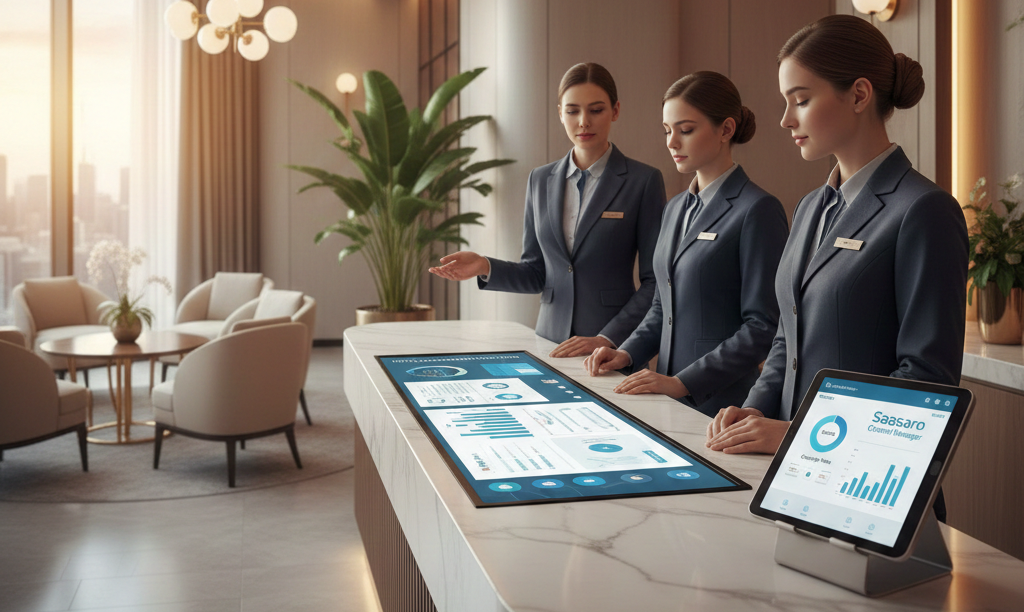
Knowing the right hospitality terms helps hotel owners, managers, and staff communicate better, avoid misunderstandings, and streamline decision-making. When your team understands industry language—whether it’s related to bookings, revenue, front-office operations, or distribution channels—it directly improves workflow, boosts productivity, and enhances the overall guest experience.
Modern hotel technology also plays a crucial role in simplifying operations. Tools like the Saasaro Channel Manager help automate room distribution, reduce overbookings, and ensure real-time updates across all OTAs. When combined with a strong understanding of key hospitality terms, such solutions enable hotel owners and managers to run their properties more efficiently and confidently.
Why Hospitality Terms Matter in the Modern Hotel Industry
Understanding essential hospitality terms is more important than ever in today’s competitive and fast-changing hotel industry. As hotels adopt new technology, improve guest experience strategies, and compete across online platforms, using clear and consistent terminology helps every team member stay aligned and efficient.
How Industry-Standard Terminology Helps Hotel Teams Stay Aligned
-
Ensures smooth communication between departments like Front Office, Housekeeping, F&B, Reservations, and Revenue.
-
Reduces confusion when discussing daily operations, occupancy, rates, or guest requests.
-
Helps teams interpret reports and data correctly, especially those related to ADR, RevPAR, OTA performance, and distribution.
-
Makes coordination easier when using tools like channel managers, booking engines, or PMS alternatives.
Impact on Training, Performance, and Service Quality
-
Speeds up new employee onboarding by giving them a clear understanding of operational language.
-
Improves team performance because everyone understands instructions, SOPs, and key metrics.
-
Enhances guest service, as staff can respond quickly and accurately to requests or issues.
-
Helps managers evaluate staff performance using standardized terms like turnaround time, room readiness, or guest satisfaction metrics.
Importance for New Hotel Owners, Managers, and Staff
-
New hotel owners can make better decisions when they understand essential hospitality terms such as occupancy percentage, channel distribution, rate parity, and forecasting.
-
Managers can communicate more confidently with vendors, OTA representatives, and tech partners.
-
Staff members can adapt quickly to modern hotel systems and processes.
-
Understanding terminology makes it easier to work with tools like the Saasaro Channel Manager, as users can interpret setting options, inventory terms, and availability updates correctly.
Front Office & Guest Service Terms
Front Office operations are the heart of hotel management, and understanding the essential hospitality terms used here is crucial for smooth guest service. These terms help staff communicate clearly, avoid misunderstandings, and deliver a seamless guest experience from arrival to departure.
1. Check-in
Meaning: The process where a guest formally arrives at the hotel, completes registration, and receives their room key.
Why it matters: Clear check-in procedures reduce waiting time, create a positive first impression, and set the tone for the guest’s stay.
2. Check-out
Meaning: The departure process where guests return their keys, settle payments, and finalize their stay.
Why it matters: A smooth check-out experience increases guest satisfaction and encourages repeat visits.
3. Concierge
Meaning: A hotel staff member dedicated to assisting guests with special requests such as booking transportation, recommending restaurants, or arranging tours.
Why it matters: Understanding this term helps staff direct guests to the right services, ensuring personalized and memorable experiences.
4. No-Show
Meaning: A guest with a confirmed reservation who does not arrive and does not cancel their booking.
Why it matters: Proper handling of no-shows helps hotels manage availability, apply policies, and reduce revenue loss.
5. Overbooking
Meaning: Accepting more reservations than available rooms, based on expected cancellations or no-shows.
Why it matters: When managed correctly, overbooking maximizes occupancy and revenue. When mishandled, it can lead to guest dissatisfaction.
6. Walk-in
Meaning: A guest who arrives without a prior reservation and requests a room.
Why it matters: Staff must know how to manage walk-ins to fill unsold rooms while maintaining rate consistency and availability accuracy.
Housekeeping & Room Operations Terms
Housekeeping is vital for hotel efficiency, cleanliness, and guest satisfaction. Knowing essential hospitality terms ensures smooth operations and a consistently positive guest experience.
-
Turnover: Cleaning and preparing a room after check-out. Faster turnover boosts room availability and occupancy.
-
Deep Cleaning: Intensive cleaning beyond daily routines, maintaining hygiene and room quality.
-
Out of Order (OOO): Rooms temporarily unavailable due to major maintenance, preventing guest complaints.
-
Out of Service (OOS): Rooms blocked for short-term minor issues, allowing quick fixes without affecting inventory.
-
Linen Par: Required linen quantity to support daily operations and laundry cycles.
-
Room Status Codes:
-
VC (Vacant Clean): Ready for guests
-
VD (Vacant Dirty): Needs cleaning
-
OC (Occupied Clean): Guest present, room serviced
-
OD (Occupied Dirty): Guest present, cleaning needed
-
HU (House Use): Blocked for staff
-
Using these hospitality terms helps housekeeping coordinate with front office and reservations teams, maintain standards, and ensure smooth daily operations.
Revenue Management & Pricing Terms
Revenue management is one of the most important areas of modern hotel operations. Understanding the essential hospitality terms used in pricing, forecasting, and distribution helps hotel owners and managers make smarter decisions that directly impact profit and occupancy. Below are the key revenue-related terms every hotel professional must know:
1. ADR (Average Daily Rate)
Meaning: The average amount earned per sold room per day.
Why it matters: ADR helps hotels understand how pricing strategies are performing and whether rates are optimized for revenue growth.
2. RevPAR (Revenue Per Available Room)
Meaning: A metric combining both occupancy and ADR to show how well your rooms are generating revenue.
Why it matters: RevPAR is one of the strongest indicators of overall hotel performance and profitability.
3. Occupancy Rate
Meaning: The percentage of rooms occupied during a specific period.
Why it matters: Higher occupancy means better room utilization, but it must balance with ADR to maximize revenue.
4. BAR (Best Available Rate)
Meaning: The lowest, unrestricted rate available to all guests at a given time.
Why it matters: BAR is the foundation of hotel pricing, ensuring rate consistency across all sales channels.
5. LOS (Length of Stay)
Meaning: The number of nights a guest stays.
Why it matters: Monitoring LOS helps in forecasting demand, designing promotions, and improving stay patterns.
6. Rate Parity
Meaning: Maintaining consistent room rates across all online channels, including OTAs and direct booking platforms.
Why it matters: Rate parity protects your brand reputation, avoids guest confusion, and prevents OTA penalties.
Reservation & Distribution Terms
In modern hotel management, understanding hospitality terms in reservations and distribution is essential for maximizing bookings and revenue.
-
OTA (Online Travel Agency): Platforms like Booking.com or Expedia that increase hotel visibility and bookings.
-
GDS (Global Distribution System): Connects hotels to travel agents and corporate clients worldwide.
-
CRS (Central Reservation System): Central platform to manage all reservations, rates, and availability.
-
Booking Window: Time between reservation and check-in; helps in planning promotions and occupancy.
-
Channel Mix: The combination of booking sources, balancing revenue and reducing dependency.
-
Allotment: Pre-allocated room blocks for OTAs or group bookings to prevent overbooking.
Food & Beverage (F&B) Department Terms
Understanding key hospitality terms in the F&B department ensures smooth restaurant operations and excellent guest service.
-
À la Carte: Ordering individual dishes from the menu, allowing flexibility and personalization.
-
Buffet: Self-service dining with multiple food options, requiring careful planning and presentation.
-
Mise en Place: Preparing ingredients and equipment before service for efficiency.
-
SOP (Standard Operating Procedure): Documented guidelines ensuring consistent food quality and service.
-
Cover: A single place setting for a guest, used to plan seating and service requirements.
Guest Experience & Service Quality Terms
In the modern hotel industry, mastering key hospitality terms related to guest experience is essential for delivering exceptional service.
-
Guest Satisfaction Score (GSS): Measures overall guest happiness and service effectiveness.
-
Service Recovery: Actions taken to resolve guest complaints and turn negative experiences into positive ones.
-
Personalization: Tailoring services and offers to meet individual guest preferences.
-
Feedback Loop: Continuous collection and analysis of guest feedback to improve operations and service quality.
Guest Experience & Service Quality Terms
In the modern hotel industry, mastering key hospitality terms related to guest experience is essential for delivering exceptional service.
-
Guest Satisfaction Score (GSS): Measures overall guest happiness and service effectiveness.
-
Service Recovery: Actions taken to resolve guest complaints and turn negative experiences into positive ones.
-
Personalization: Tailoring services and offers to meet individual guest preferences.
-
Feedback Loop: Continuous collection and analysis of guest feedback to improve operations and service quality.
Technology & Digital Hospitality Terms
Modern hotel management relies on understanding key hospitality terms in technology and digital operations:
-
Cloud PMS: Cloud-based property management system for centralized operations.
-
Channel Manager: Tool to manage multiple OTAs and distribution channels simultaneously.
-
Dynamic Pricing: Adjusting room rates based on demand, season, and market trends.
-
Contactless Check-In: Digital check-in process minimizing physical contact.
-
POS Integration: Connecting point-of-sale systems with hotel operations for seamless billing.
Compliance & Safety Terms
Understanding key hospitality terms in compliance and safety is essential for secure and legally sound hotel operations:
-
SOPs (Standard Operating Procedures): Guidelines ensuring consistent safety and operational practices.
-
Fire Safety Checklist: A systematic review of fire prevention measures and emergency readiness.
-
Audit Trail: Record of all operational and financial activities for accountability and compliance.
-
Data Privacy: Protecting guest information according to legal regulations.
-
PCI Compliance: Ensuring secure handling of payment card information.
How Mastering Hospitality Terms Helps You Grow
Mastering essential hospitality terms gives hotels a competitive edge by improving operations and guest experiences.
-
Better Communication with Staff: Clear terminology ensures all team members understand processes, reducing errors and confusion.
-
Improved Decision-Making: Knowledge of industry terms allows managers to interpret data, analyze trends, and make informed choices.
-
Stronger Guest Satisfaction: Accurate use of terms ensures seamless service, faster response times, and personalized experiences.
-
Higher Ratings and Revenue: Satisfied guests leave positive reviews, boosting online reputation and profitability.
-
Operational Efficiency with Modern Tools: Using solutions like Saasaro Channel Manager automates rates, synchronizes OTAs, and manages real-time inventory, saving time and maximizing revenue.
By mastering hospitality terms, hotels enhance team efficiency, guest experiences, and overall business growth.
Conclusion
Mastering essential hospitality terms is crucial for every hotel owner, manager, and staff member. From improving communication and operational efficiency to enhancing guest satisfaction and boosting revenue, a strong grasp of industry vocabulary ensures your hotel stays competitive in today’s fast-paced market.
Staying updated with modern tools and technology is equally important. Solutions like the Saasaro Channel Manager help automate room rates, synchronize OTAs, and manage real-time inventory—making operations smoother and more profitable. Embrace both knowledge and smart automation to elevate your hotel’s performance and guest experience.
FAQs
1. What are hospitality terms and why are they important?
Hospitality terms are industry-specific words and phrases used in hotel operations. They improve communication, efficiency, and guest service.
2. How do hospitality terms improve guest experience?
Using the right terms ensures staff understand processes, respond accurately to guest needs, and maintain service consistency.
3. What are key front office hospitality terms?
Common terms include Check-in, Check-out, Concierge, No-Show, Overbooking, and Walk-in.
4. How do housekeeping terms like Turnover and OOO affect hotel operations?
They help track room readiness, manage maintenance, and ensure smooth cleaning schedules for optimal guest satisfaction.
5. Why are revenue management terms like ADR and RevPAR crucial?
These metrics help hotels analyze pricing, occupancy, and profitability to maximize revenue.
6. How can tools like Saasaro Channel Manager help hotels?
Saasaro automates room rates, syncs OTAs, updates real-time availability, and prevents overbookings, improving operational efficiency and revenue.